


How Are GCSE Maths Exams Marked? A Clear Guide to Mark Schemes & Grade Boundaries
Quick Answer: How GCSE Maths Exams Are Marked GCSE Maths exams are marked by trained examiners using a detailed mark scheme created by the exam board. Marks are awarded for method, accuracy, reasoning and working out — not just the final answer. Grade boundaries are set after all papers are marked, based on national performance and exam difficulty. Understanding how the exams are marked can significantly increase a student’s final grade. Why Understanding the GCSE Maths Marking System Matters? Every year, thousands of students wait anxiously for their GCSE results. One of the most common questions I hear from students and parents is: “How are GCSE Maths exams actually marked?” Having marked over 10,000 exam papers across multiple exam boards,
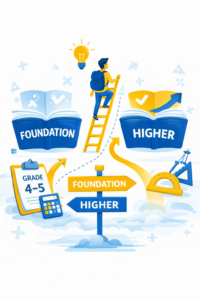
Foundation vs Higher Tier Maths – Which is right?
With 16 years of experience working in Education, I’ve spent the last 9 years working with what schools call the “Cross-over Group”. The class where some students will take the Foundation Tier and others will do Higher. Choosing between Foundation and Higher Tier is such an important academic decision that can influence overall grades and therefore future career pathways. Statements I hear many times is “Getting a grade 5 on Higher is harder” or “Foundation is better as it’s easier”, although these statements could be true for certain students, it does not apply to all. This article will include all the steps I took with students and parents to help make a confident and informed decision on which tier would

Small Daily Habits that Improve Maths Grades
How consistent routines can build confidence to learn more and achieve more. Many students we talk to think that they way to improve their mathematical ability is through long revision sessions or last-minute revision before exams. The truth is most progress is made by something much easier – small daily habits. Unlike some other subjects, Maths is a skill. It is true that there are facts to be learnt and knowledge to remember, but regular and short practice builds understanding, reduces the anxiety around Maths and helps students retain knowledge. Here’s our top 10 guide for making Maths a small daily habit. Step 1 – Spend 10-15 Minutes on Maths Every Day Keep it short. Maths should not feel like

Teaching vs Tutoring – What’s the difference? Which is best for your child?
We previously discussed how to know if a student needs a tutor and the benefits of tutoring. However, we lightly touched on whether a student would benefit from tutoring or from teaching, but many asked – what is the real difference? Many understand the main difference between Teaching and Tutoring to be the class sizes. With the average class size in schools to be 26 (gov.uk, 2025) and most tutoring is one to one, it can be easy to suggest that tutoring will result in better quality of education. However, there are many variables that can affect your child’s progress and these need to be considered when choosing interventions. What do each do? Teaching Teaching often refers to a formal

Should I Get a Tutor for My Child?
As parents, we all want to see our children thrive at school. But when homework becomes a daily argument, grades begin to drop, or your child starts losing confidence in a subject, it’s natural to question “Would a tutor help?” The truth is, tutoring can be a game changer for many children – not just for improving marks, but for building confidence and reducing stress at home. Hopefully we can guide and help you decide whether getting a tutor is the right step for your child. Will the subject impact future plans? You will hopefully agree that education is important and having knowledge in any subject is better than not. However, we also need to be realistic on how much
